Author: Tobias Warwick

  • 5 Ways To Make Your Live Performances Stand Out

    5 Ways To Make Your Live Performances Stand Out

    There’s a lot of freedom when it comes to deciding how you, as a musician, want to approach live performance. Unlike streaming music online, it’s not just about the final composition and mix.

    Audiences pay attention to your stage presence, your playing skills, your personality, your chemistry with band members, etc. There’s a lot you can experiment with when it comes to making a unique and memorable performance.

    1. Simplify Your Performance

    Depending on the kind of music you make, the difficulty of performing live can vary significantly—some get by using only an acoustic guitar while some need expensive, complex set ups that don’t work in all locations.

    The magic of live performance, though, is that it doesn’t actually need to sound exactly the way you recorded it. Feel free to do simplified versions of the complex songs you wrote. NPR’s Tiny Desk is a great way to see professional musicians try this themselves.
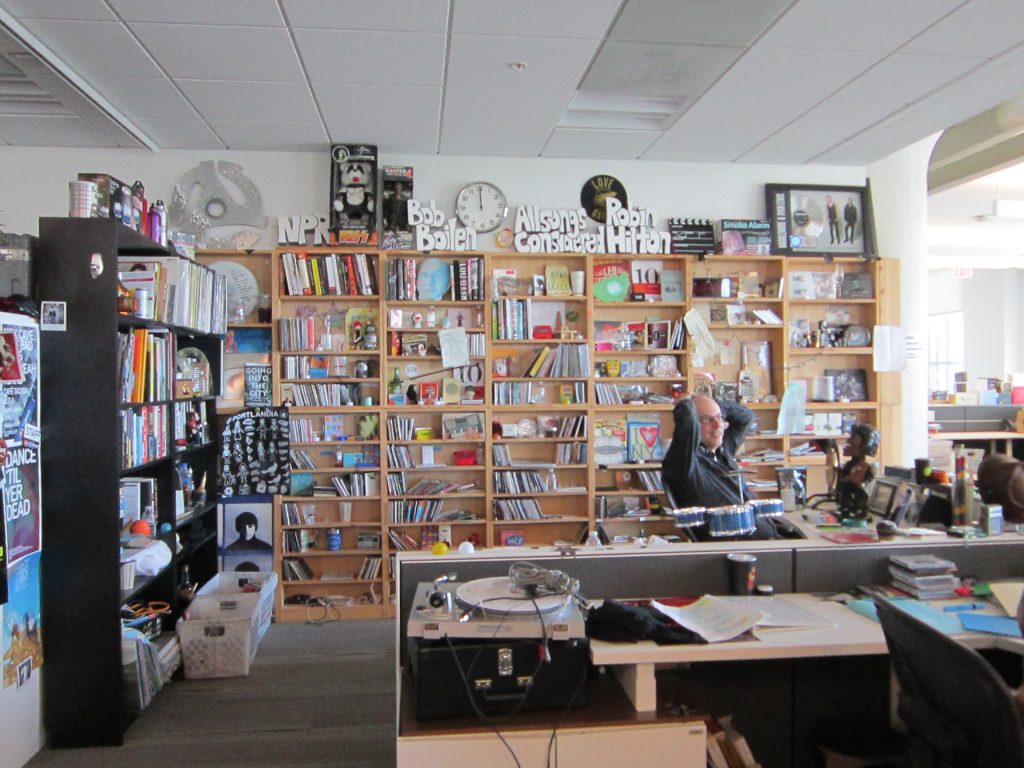
    NPR Tiny Desk

    This way, your performances won’t be limited by the venues you have access to. You’ll be able to travel gretaer distances

    And it’s not just about simplifying your performance—you can adapt it to the space and add elements you might otherwise not have added in. You may, for example, choose to bring on a couple of backup singers in place of chopped up vocals.

    2. Be Creative With Your Personal Limits

    At your current stage, it’s unlikely that you’ll be able to hire dozens of backup dancers while you perform, but that’s ok! Putting on a good show isn’t just about how much money you can spend on hiring help.

    Consider what other talents you have. Do you have a good eye for fashion? Are you good at design or motion graphics? Can you make people laugh? Find ways to weave these talents into your performances and you’ll make your performances stand out without having to break the bank.

    3. Create Live Sounds Yourself

    This might not be possible for you depending on your genre and instrument skill levels, but incorporating live music can make a big difference in how audiences respond to your performance.

    Backing tracks—even Ableton Live sets—can lead to impressive performances, but you’ll really need to justify the choice to your audiences. Why couldn’t they just play your song out loud at home on their own sound system? What are you doing to make the price of admission worth it?

    And although you might be doing something difficult and complex with your digital/analog set up, audiences don’t necessarily understand that. To them, it may not make a difference whether you’re playing everything live on an analog instruments or playing it off a computer.

    This is not necessarily a positive or negative, just something to keep in mind as you plan your performances; don’t rely on impressing your audiences just because your set up is fully analog. At the same time, it’s not a good idea to fool your audiences into thinking you’re doing something you’re not. This is all to say that your performance shouldn’t have the potential to confuse your audiences.

    One of the reasons people respond well to live guitar playing is because the performance is easily seen and understood. The sound of a guitar too, is natural due to all the dynamics and nuances of playing, and audiences can immediately tell if you’re good at it or not.

    Many instruments have this potential, but you need to carefully assess how things will appear to your audience. Keyboard can be impressive, but it’s hard to show the audience what you’re doing, and if it sounds too synthetic or uniform, audiences may lose interest.

    4. Implement Variety

    If you have a one or two hour set, mix it up a little! Even if you’re playing an acoustic, switch up your style or genre every now and then to make sure it doesn’t sound like you’re playing the same song over and over again.

    You can also be strategic with this variety and use it in a storytelling capacity. You can, for example, start your set off with energy to get your audiences hyped up for your performance. In the middle of your set, you can focus on performing slower, more emotionally resonant songs to help audiences connect with your messaging. You can then end with your loudest, most powerful songs to close as strongly as you can.

    5. Put On A Show! Don’t Focus On Promotion

    People go to music performances for entertainment, not to be advertised to. Yes, part of why you’re performing is to get your name out there and to connect to new fans, but the pitch should be in the quality of your performance, not the self-promotion you do between songs.

    Don’t just ask for them to follow you, give them a reason to. Putting on a great show isn’t the only way to do this either—consider how clear the messaging is in your songwriting. If your message resonates with people, they’ll follow!

    If, however, you write empty, cliched songs with your only goal being to become famous, audiences will see right through you and forget about you the second you step off stage.
  • 3 Principles That Make Musicians Stand Out

    3 Principles That Make Musicians Stand Out

    Making music is easier than it’s ever been before. Instruments are more widely available and affordable. Resources like Digital Audio Workstations (DAWs) and Virtual Studio Technologies (VSTs) have democratized the music making process: as long as you have a computer, you can write, record, and produce songs.

    And if that weren’t enough, marketing music has changed dramatically in the last ten years. If you can use social media well, you don’t need to rely on traditional advertising channels.

    Musicians used to require a lot of equipment and financial support to find success in making music. Now that there are less barriers to becoming a musician, we’re seeing a lot more musicians enter the increasingly saturated “market.”

    With so many musicians trying to carve out a path for themselves, how can musicians who are starting out, realistically find their audience?

    1. You Need A Thesis

    Most people online talk about the importance of creating high quality “content,” but it’s misleading way of approaching music making.

    Yes, you should be focusing on quality, but you shouldn’t be viewing your music as “content” to be consumed. By doing that, you begin to obsess over trends and marketability.

    You look to successful “high quality content” for inspiration, but all you do is contribute another generic piece to another passing fad.

    To make your work consistent, you should formulate a thesis around which you can base your music and brand. You should have a concrete overarching message you seek to present the world with your work.

    This can be a long process, but it’s worth the time spent. Consider your identity and beliefs. Consider how your sound and style fit into particular communities.

    Your lyrics, fashion, aesthetics, production choices, video editing style etc. should support your thesis.

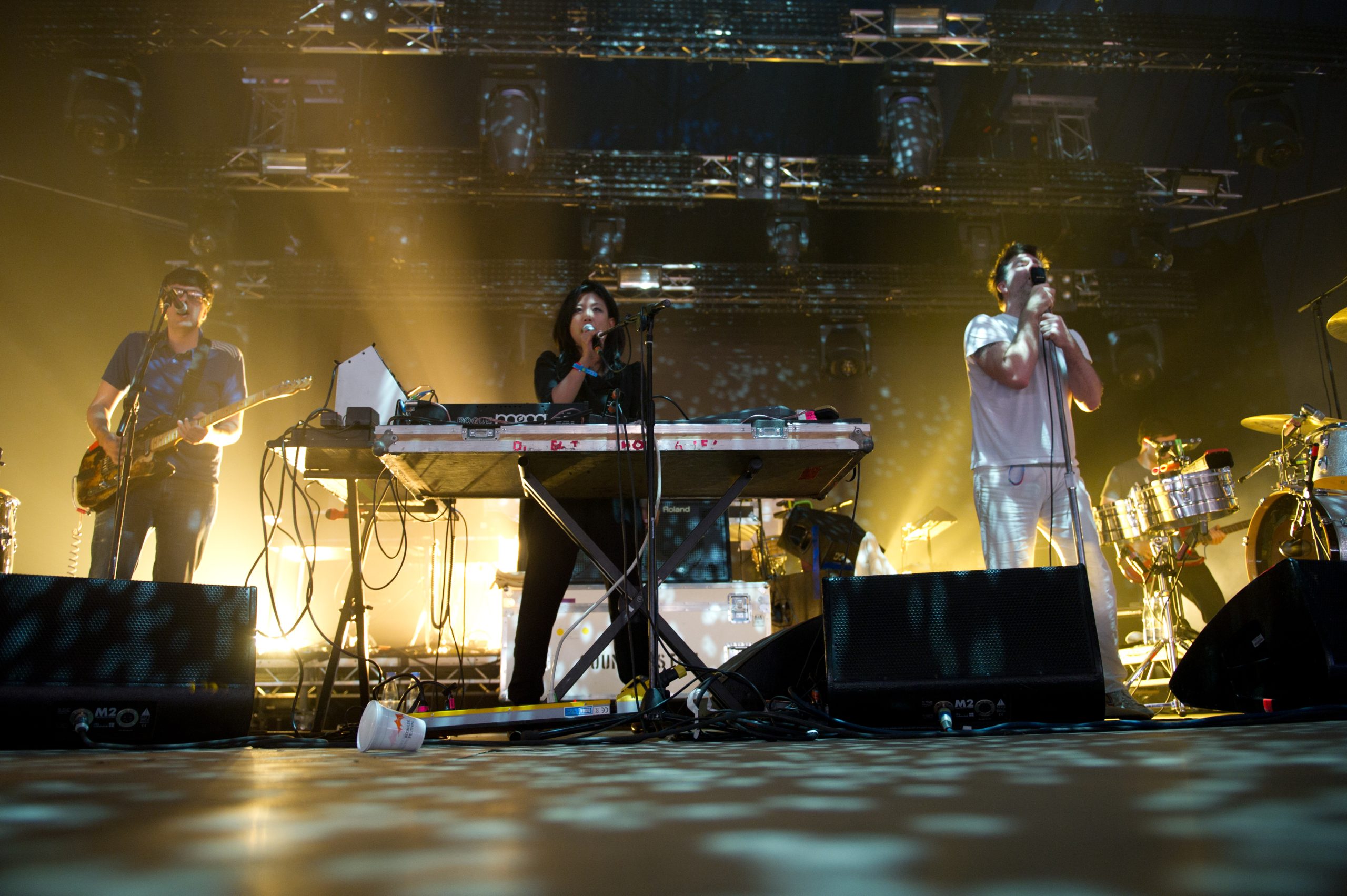
    LCD Soundsystem, for example, explores cultural cynicism, authenticity, and grief through painfully candid lyrics and a rough, DIY sound and visual style.

    MGMT combines indie/alternative bops with psychedelic soundscapes to call attention to our biological vulnerabilities that dictate our decision making process and perception of the world.

    LCD Soundsystem performing at Roskilde Festival 2010

    2. You Need To Be Authentic

    This is advice that’s given all the time, but it’s usually not given well. Authenticity doesn’t mean sharing parts of your life that you’d rather keep private. It doesn’t mean constantly engaging with potential fans to the point of insincerity.

    Real authenticity is allowing yourself to come through in your music without self-judgement or alteration. You stop letting expectations and “norms” guide your creative process and behavior.

    You no longer act the way you think you need to act in order to appeal to fans. Even if “blending in” gets you some traction, it’ll be exhausting to keep up the facade over the long run, and you risk losing the spark that got you into music in the first place.

    By being authentically yourself, you spend less of your time and energy worrying about fitting in. By staying true to your actual interests, you’ll end up enjoying the process more and meeting people you click with effortlessly.

    This does come with a risk: you’re exposing your true self to criticism and hate.

    It’s easy to downplay mean comments by seeing it as an attack against the genre. It’s even easier to do that when your entire musical identity and style is stereotypical of the genre.

    If you’re really putting yourself out there, though, the comments feel personal. They’re not attacking the genre, they’re attacking you.

    Getting over this hurdle is difficult, but it has an enormous pay off. You’re able to reach people on a deeper level, and build a fanbase that actually connects with your personality and beliefs, and will stick with you for the long run. Fans who will get your merchandise, rave about you to their friends, and attend you concerts.

    You may get a larger number of fans by trying to fit in, but there won’t be much that differentiates you from other musicians they listen to. Afterall, they can just as easily move onto other artists who do the exact same thing you do: try to fit in.

    3. Take Risks

    For some musicians, making music is automatic while for others, it’s a daunting undertaking. We have different starts, tools, taste, expectations, and crutches.

    We end up finding a comfortable pattern that helps us write songs quickly, whether it’s using the same few guitar chords, VSTs, and effects. You end up making a lot more music… but it all sounds kind of the same.

    Experimentation might feel uncomfortable, and you might end up with a bunch of failed songs that don’t sound right, but in the long run, it’s worth it. You keep growing as an artist and your musical style becomes distinct and instantly recognizable.

    There are many ways to take risks and experiment with your music, whether it’s through using new samples and sounds, learning new chords and seeing where they might fit in, or taking influence from entirely different styles of music.

    Drawing works a lot like this as well: style isn’t something you invent because you’ve gotten good at drawing, it’s the result of what you practice and long-term experimentation.

    The areas that you experiment in is ultimately up to you, but it is worth thinking about the specific qualities of music that you enjoy. If timbre is important to you, experiment with different instruments or synth settings. If harmony floats your boat, explore some jazz theory.

    Differentiating Yourself

    At the end of the day, music should be something you enjoy doing. Don’t do it because you want fame, or fortune, there are easier ways to get that stuff.

    Make music because you can’t help it. Do it because you love the process and the result. Do it because you appreciate and honor the craft. Set goals for yourself and expand your musical knowledge.

    With enough consistency, you’ll pave a way for yourself as a musician.

  • Bad Bunny Slated To Perform At Super Bowl

    Bad Bunny Slated To Perform At Super Bowl

    Puerto Rican music superstar Bad Bunny used his hosting debut on the season premiere of Saturday Night Live to respond to backlash over his upcoming Super Bowl halftime performance set for February 8, 2026, in Santa Clara, California.

    The artist, born Benito Antonio Martínez Ocasio, addressed criticism from conservative commentators who objected to his Spanish-language music and past decision to avoid touring the U.S. mainland due to fears of ICE raids targeting his fans.

    During his bilingual monologue, Bad Bunny leaned into humor and cultural pride. He joked that “even Fox News” was happy about his Super Bowl gig, leading into a parody montage of network personalities edited to say, “Bad Bunny is my favorite musician and he should be the next president.”

    Switching to Spanish, he praised the contributions of Latinos in the U.S., declaring, “Our footprints and our contributions in this country — no one will ever be able to take that away or erase it.”

    He ended with a cheeky challenge: “If you didn’t understand what I just said, you have four months to learn.”

    The performance came amid political commentary surrounding the halftime show. Former Trump adviser Corey Lewandowski claimed ICE would be present at the Super Bowl, while conservative podcaster Benny Johnson labeled Bad Bunny “anti-ICE” and “a massive Trump hater.”

    Despite the criticism, Bad Bunny’s SNL appearance signaled his intent to stand firm and unapologetic. His message in Spanish was both a cultural statement and a show of defiance ahead of one of the world’s most-watched live events.

    Bad Bunny’s rise to global fame has been marked by his fusion of reggaeton, Latin trap, rap, and pop. He recently completed a sold-out residency in Puerto Rico and has used his platform to speak out against immigration policies under President Donald Trump.

    His decision to skip U.S. tour dates reflects concerns about ICE targeting concertgoers. Now, as the Super Bowl approaches, his halftime show is poised to be one of the most talked-about in NFL history.

    The NFL’s partnership with Roc Nation, founded by Jay-Z, has shaped recent halftime lineups, including Jennifer Lopez, Shakira, The Weeknd, Rihanna, and Kendrick Lamar. With Bad Bunny stepping into the spotlight, the league continues to embrace diverse voices on its biggest stage.

  • Blood Cultures

    Blood Cultures

    Blood Cultures is an enigmatic group that [ ].

    They are set to release something new n October 9th.

  • Hello world!

    Hello world!

    Welcome to WordPress. This is your first post. Edit or delete it, then start writing!